Fight Star - Team Manager Idle
- 4.1
- Rating
- 10.00K
- Installs
- Free
- Price

 Analysis by App-foxy
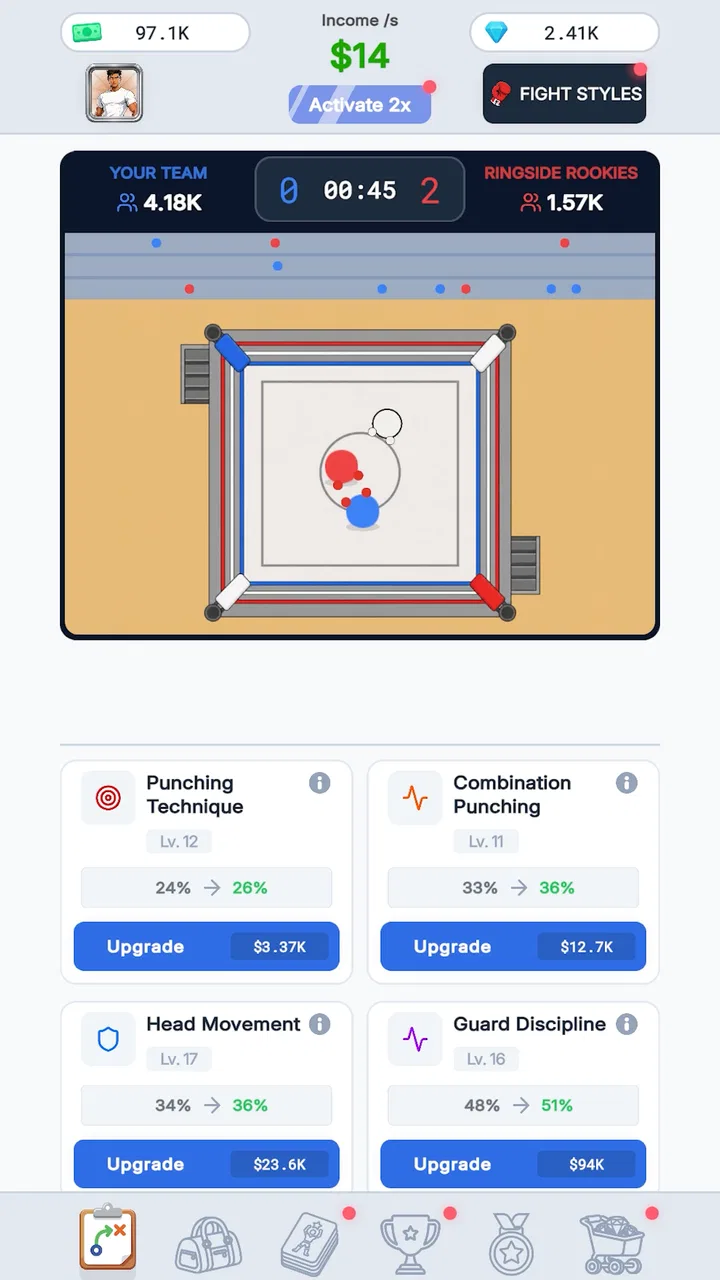
I went into Fight Star - Team Manager Idle expecting a lightweight sports-management game, and that is exactly where it fits best. It is a free boxing and MMA gym game from Gryphon Games, built around the satisfying idea of improving fighters, watching their progress, and chasing the next title rather than controlling every punch yourself. The first thing that matters is understanding its pace: this is not a traditional fighting game, and it is not trying to replace one.
Instead, I spend my time making management decisions, checking how the gym is developing, and deciding what deserves attention before the next bout. The action happens through the fighters, while my role is to shape the conditions around them. That makes it easy to pick up for a short break, but it also means the game depends heavily on whether I enjoy gradual progress more than direct competition.
How the gym loop feels from the first action to the next session
I find the gym loop easiest to follow when I treat each visit as one small management session: check what has changed, choose a priority, and leave with a reason to return. That keeps the idle pace from turning into aimless tapping and makes the next check-in feel connected to the last. The same deliberate approach helps when a session feels stalled or unclear.
You May Also Like

 Blood Strike: 2.5 Anniversary
Blood Strike’s Loadouts Turn Every Drop Into a Tactical Gamble
A close look at Blood Strike’s custom loadouts: how fast access to signature weapons reshapes its battle royale rhythm, rewards preparation, and narrows the gap between fights.

 Pandora - Music & Podcasts
Pandora’s Music Is Easy to Start, but Harder to Recover
Pandora’s strength is its low-effort path from a seed to a station. Its weak spot is how much confidence it asks you to place in connection, setup, and quiet recovery.

 8 Ball Pool
 Is Built on Rivalries, Rematches, and Routine
A close look at the rivalries, rematches, shared routines, and unanswered safety questions that turn a quick pool match into a persistent mobile community.

 Samsung Music
’s Quiet Strength Is Playing What You Already Own
Its reach comes less from spectacle than from dependable access to a personal library. That simplicity is both the app’s strongest retention engine and its ceiling.

 AccuWeather: Weather Radar
AccuWeather Review: A Quick, Clear Forecast for Everyday Decisions
For everyday plans, the best forecast is the one you can understand quickly. AccuWeather makes rain timing, radar, and local conditions easy to act on, with a few trade-offs.

 Hill Climb Racing
Why Hill Climb Racing Still Turns Crashes Into One More Run
A tiny car, a bumpy hill and one more upgrade: Hill Climb Racing keeps resurfacing because its simple chaos makes every near-miss feel personal.
More From Our News Desk



Starting with a decision instead of a joystick
The first useful mental adjustment is to stop looking for a virtual ring where I can throw punches manually. Fight Star presents itself as an idle fighting manager, so the opening action is about building a boxing and MMA gym and preparing fighters for the climb toward titles. I am not judged on reflexes or combo timing. I am judged by how well I use the opportunities the management layer gives me.
That distinction makes the game approachable for people who like sports games but do not want a demanding control scheme. I can check in, make a choice, leave the game, and return later without needing to remember a long sequence of controls. The appeal is closer to running a small fight operation than playing a full match.
My advice is to treat each early decision as part of a chain rather than as an isolated button press. Training is valuable because it should support future fights, and fights matter because they create the next reason to improve the gym. If I only chase the most immediate reward, the broader progression can feel less meaningful. If I think one step ahead, even a small upgrade feels connected to a larger plan.
Watching feedback arrive in small, readable steps
The feedback rhythm is the strongest part of this format. I make a management choice, see the fighter or gym move forward, and then have a new reason to return. That action-and-response pattern is simple, but it gives the game its pull. The reward is not only a victory screen; it is also the feeling that a fighter is becoming more prepared for the next challenge.
Idle games live or die by the clarity of that rhythm. Here, the sports setting helps because training, bouts, and titles naturally create a sense of direction. I am not improving a random collection of objects. I am trying to turn a developing gym into a more successful fight team. Even when the individual step is modest, the boxing and MMA context makes the progress easier to understand.
There is also a useful trade-off in the way I spend attention. I can play actively for a while, checking the gym and making decisions, or use the game as something to revisit between other activities. The second approach is probably the intended comfort zone. It is a good companion for a commute, a coffee break, or the few minutes before bed, provided I enjoy checking progress more than demanding constant interaction.
Why the reward works, and where it can feel thin
The main reward is the sense of moving toward stronger fighters and bigger achievements. Winning titles gives the management loop a destination, while training gives the short-term actions a purpose. I like that combination because it prevents the game from being only a collection of disconnected upgrades. There is a visible fantasy behind the numbers: start with a gym, develop its fighters, and build toward recognition.
At the same time, this kind of reward is naturally gradual. Someone looking for immediate excitement in every minute may find the pace too restrained. The game asks me to appreciate accumulation. A training choice may matter more because of what it enables later than because of the instant result on screen. That is satisfying when I am in a planning mood, but less satisfying when I want the sharp impact of a conventional arcade fight.
I also noticed that the best way to enjoy the rewards is to set a personal reason for the next check-in. For example, I might return because I want to see whether a fighter is ready for a more important bout, or because I want to push the gym toward its next meaningful improvement. Without that small goal, idle progress can blur into routine collection.
The reset that gives another session a purpose
The next session begins because the previous one leaves unfinished work. A fighter may need more preparation, the gym may have another improvement to pursue, or a title goal may still be out of reach. That reset is not a dramatic restart; it is the ordinary idle-game cycle of checking results, making the next adjustment, and waiting for the following opportunity.
This is where I think the game will divide players. I enjoy the gentle reset because it lets me return without pressure. I do not need a long uninterrupted block of time to make progress. However, players who want every session to contain a complete story may find the loop repetitive. The game’s satisfaction comes from continuity, not from a series of self-contained matches.
A practical way to avoid aimless sessions is to finish each visit by choosing one clear priority. I might focus on training, look for the next title-related step, or simply collect progress and leave. That small habit makes the return feel intentional. It also helps reveal whether the game is right for me: if I repeatedly open it without caring what I want to accomplish, the idle structure may not be holding my attention.
What the loop says about the game overall
After spending time with it, I see Fight Star as a relaxed management game with a combat theme, not a substitute for a boxing simulator or an MMA action title. Its loop is easy to explain: make a gym decision, receive progress, work toward a reward, then return when the next improvement or fight gives the session a reason. That loop is clean and accessible, but its modest interaction is also its defining limitation.
The best reason to play is the steady feeling of building a fight team, not the promise of hands-on ring action. If that sounds appealing, the game can become a pleasant routine. If I want precise striking, defensive movement, or the tension of personally controlling a match, I would choose a conventional fighting game instead.
Training choices and the value of thinking ahead
The most useful insight I can offer is to avoid treating every available improvement as equally urgent. In a manager game, the temptation is to tap whatever gives an immediate sense of progress. I get more satisfaction when I connect the decision to the next obstacle. If the goal is a title, I should think about what kind of preparation will make that goal realistic instead of spreading attention without a plan.
This approach also makes the game feel less passive. Idle mechanics can create the impression that the player is only collecting what the system has already produced. Planning changes that. I am still working within a relaxed structure, but I have a reason for each visit. The gym becomes a project rather than a notification box.
Another useful habit is to compare short-term comfort with long-term momentum. A quick reward may be attractive, but the better choice can be the one that improves the next cycle. The game does not need complicated tactics to make this interesting; it only needs me to notice that the timing of a decision affects how satisfying the next return feels.
Using short sessions without losing the thread
For everyday use, I would play in short, deliberate visits. A realistic example is opening the game during a lunch break, checking the gym’s current state, making one or two decisions, and closing it after identifying the next milestone. Later, I can return with a clear purpose instead of repeatedly tapping through the same screens.
That routine suits the game better than trying to force a long evening session. The idle structure is designed around progress that continues between visits, so its value comes from fitting into spare moments. I would not recommend it to someone who expects a deep, uninterrupted sports campaign every time they play. Its strength is convenience and continuity.
Short sessions also make the reward cycle easier to appreciate. I can see what changed since the previous check-in, decide whether the result is enough, and leave before the routine becomes tiring. If I stay too long without a meaningful objective, the simple loop can start to feel like maintenance rather than play.
Free access, optional spending, and the practical trade-off
The game is free to download, which makes it easy to try without committing money at the start. It includes in-app purchases ranging from $0.99 to $99.99 per item, so I would approach the purchase screen carefully and decide in advance whether I want to spend anything. The wide range means the game can remain a no-cost experiment, but it also means players should be comfortable ignoring optional offers if they prefer a strict free experience.
For me, the right question is not whether spending exists, but whether the basic loop is enjoyable before spending becomes part of the routine. I would first play normally, learn how training and progression feel, and only then decide whether a purchase genuinely improves my experience. Buying something simply to speed through a loop I do not enjoy would miss the point.
Parents should also note the Everyone 10+ content rating. That places it above a completely unrestricted children’s label, so I would still use the device’s purchase controls and discuss spending expectations with younger players. The game’s sports-management presentation may be approachable, but the presence of optional purchases makes a little supervision sensible.
How it compares with other sports and fighting games
Compared with a traditional boxing game, Fight Star gives up direct control in exchange for easier, more flexible sessions. I do not get the same physical sense of landing a punch or reading an opponent in real time. In return, I can focus on development, preparation, and the long arc from gym building to title chasing.
Compared with a standard sports manager, the boxing and MMA setting gives the progression more personality. Fighters and titles create a clearer emotional direction than an abstract team spreadsheet. The trade-off is that anyone searching for detailed league administration or a highly technical simulation may find this experience too streamlined.
It also differs from many idle games because its theme gives the repeated cycle a concrete story. The next return is not merely about collecting a generic resource; it is about checking whether the gym is closer to producing successful fighters. That does not eliminate repetition, but it makes the repetition easier to follow.
Who will enjoy the manager approach most
I would recommend it to someone who likes sports themes, incremental progress, and games that respect short stretches of free time. It is especially suitable for players who enjoy asking, “What should I improve next?” rather than, “How do I win this exchange right now?” The free entry point also makes it simple to test whether the idle pace matches personal taste.
It is less suitable for players who need constant manual input, competitive multiplayer tension, or a detailed simulation of every round. It may also disappoint anyone who expects the title-chasing premise to deliver the same intensity as a full fighting game. The central experience is management and return visits, so the decision should be based on that loop rather than on the combat theme alone.
I would also skip it if I know I dislike waiting for progress or repeating similar check-ins. No amount of boxing flavor changes the fact that this is an idle manager. Its appeal comes from patience and small decisions. Players who find that structure calming will likely get more from it than players who see it as too hands-off.
Device details and what they mean in practice
Fight Star is currently at version 1.3.0 and requires at least iOS or Android 12. That requirement is worth checking before downloading, particularly if I am using an older phone or tablet. On a compatible device, the game’s simple session structure makes sense for mobile play because it does not demand that I reserve a large block of time or keep both hands busy.
The game has passed ten thousand installs and holds a 4.1 average from around one hundred eighty ratings, with fourteen written reviews. Those figures suggest a modest but visible player base rather than a giant sports franchise, and I would set expectations accordingly. I am approaching it as a focused idle title from Gryphon Games, not as a fully licensed replacement for a major console boxing series.
The release date is July 24, 2026, so the version and platform requirement are details I would keep in mind when checking compatibility and deciding whether the current build suits my device. The important practical point is simple: confirm that the operating system is supported, then give the game enough time to show its return-based progression before judging it after only a few taps.
My final call after following the full cycle
Fight Star - Team Manager Idle works because its cycle is understandable and easy to revisit. I make a gym decision, watch the results feed back into fighter development, enjoy the reward of progress toward titles, and return when the next step is ready. That structure feels comfortable on mobile and gives the boxing and MMA theme a useful sense of direction.
Its limits are just as clear. The action is indirect, the pace is gradual, and the repeated check-in pattern will not satisfy players who want a hands-on fight. Optional purchases also deserve a deliberate approach, especially for younger players. I would not recommend it as an all-purpose sports game, but I would recommend trying it as a relaxed gym-building idle game.
My verdict is positive with a specific condition: play it for the management loop, not for the illusion of controlling a bout. When I set a small goal for each visit and think one cycle ahead, the game gives me a pleasant reason to come back. When I expect constant excitement, it feels too quiet. For the right player, that quiet rhythm is precisely what makes this free sports game worth keeping around.
FAQs for Fight Star - Team Manager Idle
01What is Fight Star - Team Manager Idle?
Fight Star - Team Manager Idle is a casual management game centered on building and improving a team of fighters. Instead of controlling every punch manually, you focus on recruiting characters, upgrading their abilities, organizing your lineup, and preparing them for increasingly difficult battles. The idle system allows progress to continue with limited input, making it suitable for short play sessions as well as longer periods of management.
02How does the idle progression system work?
The game is designed to generate rewards while you are away, so your fighters can continue earning resources or advancing through battles after you close the app. When you return, you collect the accumulated rewards and use them for upgrades, new recruits, equipment, or other improvements. However, active play is still useful because strategic decisions, stage progression, and stronger challenges generally require regular attention.
03Does Fight Star - Team Manager Idle require an internet connection?
An internet connection may be needed for certain features, such as synchronizing progress, receiving online rewards, displaying advertisements, downloading updates, or accessing limited-time events. Some basic management or previously loaded content may work offline, but this can depend on the version and device. If you plan to play while traveling, it is best to test offline access before relying on the game without mobile data or Wi-Fi.
04Is Fight Star - Team Manager Idle free to download and play?
Fight Star - Team Manager Idle is generally presented as a free-to-download mobile game, allowing players to begin without paying an upfront purchase price. Like many idle and management titles, it may include optional in-app purchases for currencies, bundles, upgrades, or convenience features. Advertisements may also be part of the experience. You can usually progress without spending, although purchases may accelerate development or reduce waiting.
05Is the game suitable for casual players and younger users?
The simple management-focused gameplay makes Fight Star - Team Manager Idle approachable for casual players who enjoy upgrading characters without learning complicated controls. Nevertheless, the fighting theme, competitive presentation, advertisements, and possible in-app purchases should be considered before installing it for younger users. Parents should review the store rating, privacy information, and device purchase settings, since age suitability and available features can vary by platform and region.
Pros
- Simple idle progression makes it easy to manage fighters casually.
- Team-building choices add strategy beyond basic tapping.
- Matches are quick
- making the game suitable for short play sessions.
- Distinct fighters provide variety when creating your ideal lineup.
- Offline rewards help your team progress when you are not playing.
Cons
- Progress can become heavily dependent on repeated upgrades and waiting.
- Later stages may encourage spending to speed up progression.
- Combat offers limited direct control during individual fights.
- Duplicate fighters or upgrade materials may clutter the collection system.
- Frequent notifications can feel intrusive if left enabled.

Fight Star - Team Manager Idle
Gallery